



Everything a New Nail Artist Needs — Tufiprofi Guide
17/10/2025
- What is a master starter kit?
- Disinfection and sterilisation of instruments
- Manicure instruments
- Gel polish and other materials
- Nail polish drying lamp
- Supportive supplies and materials for manicure
Stepping into the nail world feels like opening your own mini studio: exciting, a little nerve-racking, and totally doable with the right setup. This guide cuts through the noise and shows you exactly what matters on day one—clean, safe workflow, reliable tools, smart product choices, and a curing routine you can trust. From a focused starter kit to hygiene, you’ll be proud of, we’ll help you build a station that looks professional, works efficiently, and keeps clients coming back.
What is a master starter kit?
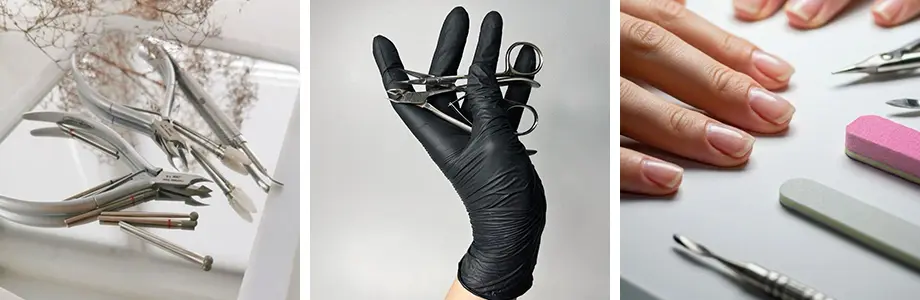
Starting a nail career feels like opening your own mini beauty studio: exciting, a little daunting, and absolutely doable with the right basics. A master starter kit is a minimal—but complete—setup that lets you work cleanly, safely, and beautifully from day one. It’s not about buying every bottle on the shelf; it’s about choosing a focused nail kit set that covers prep, application, curing, and hygiene.
If you’re asking yourself “whats a manicurist?”—think of a pro who balances technique, hygiene, and aesthetics while building a personal workflow. Over time, you’ll shape your own manicurist board: your way of organizing tools, steps, and timing so every service feels consistent and efficient.
.jpg?1761816562619)
.jpg?1761816693878)
.jpg?1761816784627)
.jpg?1761816805941)
Disinfection and sterilisation of instruments
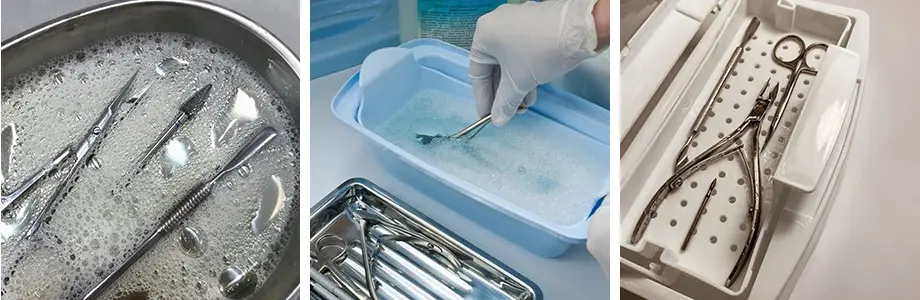
Hygiene isn’t a nice-to-have; it’s your reputation. Every service follows two non-negotiable steps:
Disinfection comes first: pre-clean instruments with a brush, then soak them in a professional solution according to the label. Work in gloves, use closed containers, and track contact time.
Sterilisation finishes the job: dry tools go into sealed sterilisation pouches and then into a dry-heat unit or autoclave. Date the pouches, store them dry, and open in front of the client.
Small habits amplify trust: hand antiseptic at arm’s reach, a clean/used zone on your table, and disposables where it makes sense. Clients notice—and they return.
.jpg?1761817519394)
.jpg?1761817590053)
.jpg?1761817621961)
.jpg?1761817638613)
.jpg?1761817678505)
Manicure instruments
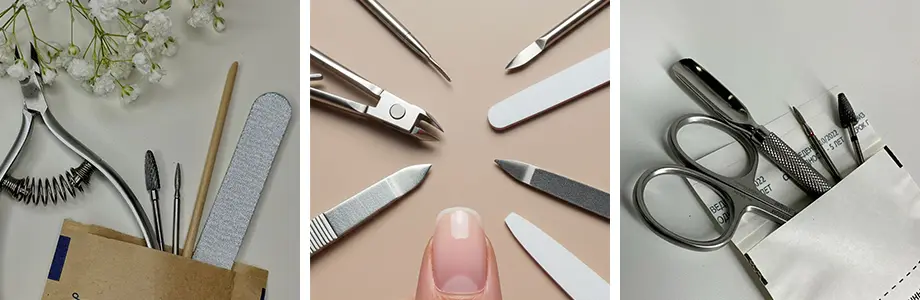
Quality tools make work smoother and result cleaner. Start with fingernail tools you’ll truly use every day and upgrade as your skill grows.
Core nail art tools for a precise, comfortable workflow:
- A pusher or orange sticks for gentle cuticle lifting and plate cleaning.
- Nippers or scissors (choose the geometry your hand prefers) for safe cuticle removal.
- Files (180/240 grit for natural nails; 100/180 for enhancements) and a soft buffer for plate prep.
- A dust brush that actually clears particles rather than redistributing them.
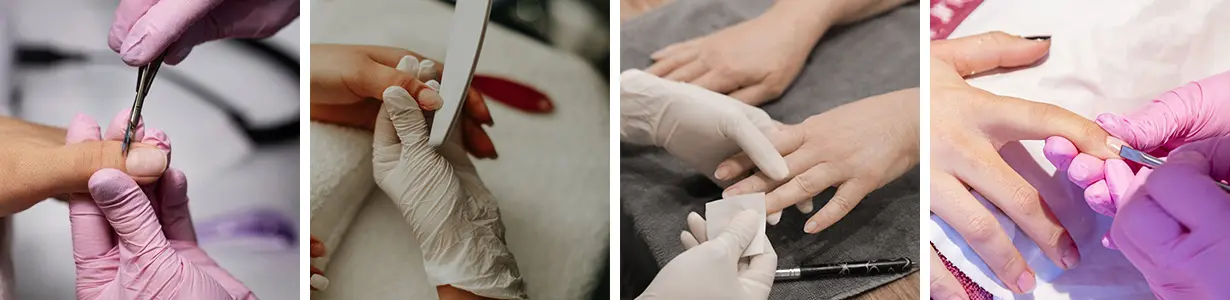
If you plan to work with an e-file, add a basic bit set and an extractor; if not, keep it manual and immaculate. A tidy station, sharp instruments, and confident motions say more than any marketing.
Gel polish and other materials
The most common beginner mistake? Buying the entire color wall. Curate instead. A smart nail kit for beginners covers:
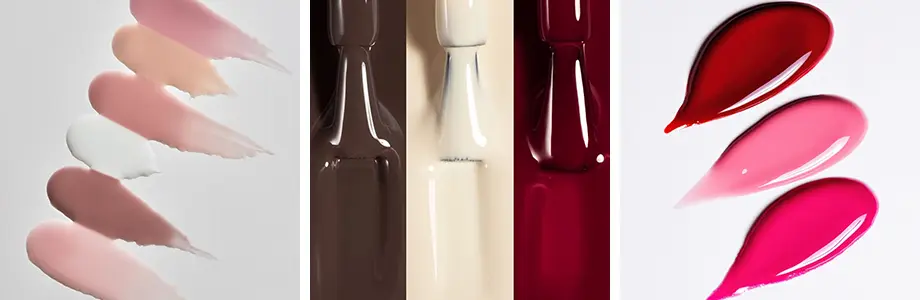
- Prep liquids (dehydrator/cleanser; primer—acid or acid-free, matched to the nail).
- Bases with the right flexibility: softer for flexible plates, harder for dense ones.
- Color: 8–12 purposeful shades (nudes, milky, a signature red, and a couple of on-trend tones).
- Top coats in glossy and matte; no-wipe saves time and lint.
- Removal: professional remover, foil/caps, and files (or bits) to work cleanly.
Wondering how do you do nail art with a limited palette? Texture, contrast, and placement go further than endless bottles: a thin liner brush, a dotting tool, and a steady cure schedule can create dozens of looks. As for nail accessories, think functional first (forms, tips, decals you’ll actually use), then expand with client demand.
.jpg?1761817310127)
.jpg?1761817339880)
.jpg?1761817395362)
.jpg?1761817425142)
.jpg?1761817463661)
Nail polish drying lamp
The lamp is half the service. Curing determines shine, strength, and wear—period. Choose a UV/LED unit with 48–60 W, smart diode layout, and a roomy interior so the thumb never falls out of the light zone. Timers at 30/60/90 seconds keep you consistent; a low-heat mode tames the warmth of thick bases or builder gels.
Under-curing leaves product soft and dull; over-curing can make it brittle. When your lamp is dialed in, your sets look better on day one and on day twenty-one. If you’re budgeting, invest here first; your colors only matter if your chemistry cures correctly.
Supportive supplies and materials for manicure
These “invisible heroes” keep services clean, fast, and comfortable:
- Gloves, masks, hand antiseptic, and disposables for surface hygiene.
- Lint-free wipes (real ones), table organizers, labeled bottles, and a tidy waste workflow.
- Dehydrator/cleanser and the right primer to control adhesion and avoid lifting.
- Cuticle oil and hand cream for the finish—and client education on aftercare.
This is also where planning your manicurist board pays off: keep high-touch items within reach, stow backups where you can grab them without breaking flow, and refresh stock on a weekly cycle. If you’re mapping add-on services and asking what do u need to do acrylic nails, think in systems: a compatible monomer/polymer pair, proper ventilation, separate brushes, dedicated files, and a curing/setting workflow distinct from your gel routine. Build that kit only when you’re ready to offer it consistently.
.jpg?1761816907231)
.jpg?1761816941409)
.jpg?1761816972423)
.jpg?1761817020988)
.jpg?1761817098703)
Your first setup doesn’t have to be massive—just well-planned. A focused nail kit set, a few dependable tools, and a curing lamp you trust will take you much farther than a crowded shelf. Start with a tidy workstation, consistent hygiene habits, and a simple color range that fits your typical requests. As real feedback comes in, expand thoughtfully: add shades in families (nude, red, milky), then bring in accents and a handful of nail accessories you’ll actually use.
If you’re still assembling the basics—selecting instruments, choosing a beginner-friendly kit, or polishing your technique—Tufiprofi can help you match products to your workflow, organize the table so everything is within reach, and set a curing routine that’s reliable every time. The goal isn’t “more,” it’s “coherent”: fewer bottlenecks, cleaner finishes, longer wear. With that foundation, you’ll building a client list that returns because your work looks good not only on day one, but on day twenty-one too.


